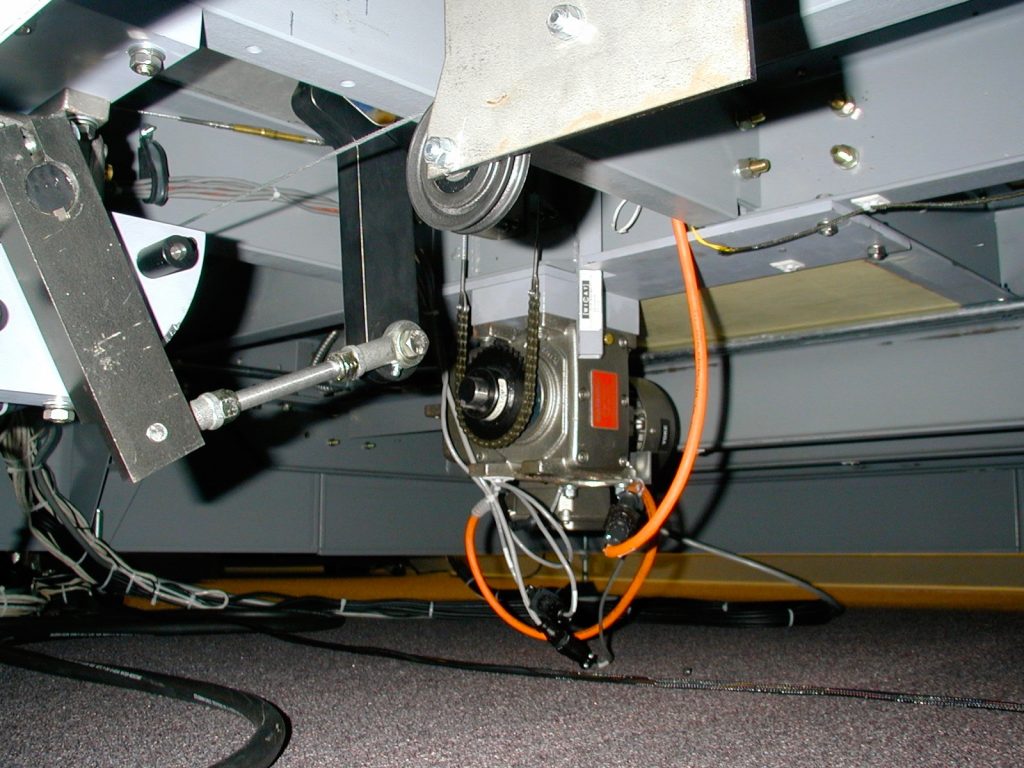
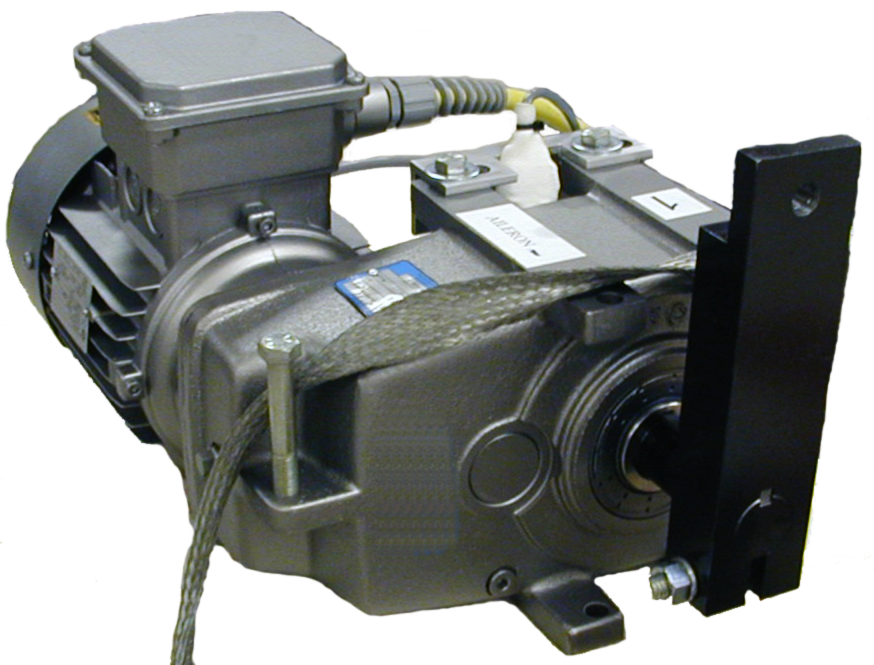
Model 300-X Servo-Based Feedback Control Loading System
Professional Feedback Control Loading for Certified and Advanced Training Devices
The 300‑X Control Loader is a servo‑based feedback control loading system designed for professional flight simulation and advanced training applications. It delivers accurate, repeatable force feedback for aircraft controls used in FAA‑qualified training devices and other high‑fidelity simulation systems where reliability and consistency are essential.
Engineered for long‑term professional use, the 300‑X supports FAA Level 1–7 certified training environments, including AATD, FTD, and CPT configurations when integrated as part of a qualified simulator system. Its all‑electric, servo‑driven architecture provides precise force response and predictable behavior while minimizing maintenance and operational complexity.
The 300‑X shares core design principles with Servos & Simulation’s flagship control loading systems, making it well suited for training programs and simulation platforms that require certification readiness, force realism, and long‑term support, without the scale or requirements of full Level D applications.
Standard Torque Specifications – typical transport aircraft (KingAir):
| Axis | Peak | Continuous | Friction |
|---|---|---|---|
| Ailerons (Roll)* | 64 Lbs (86Nm) | 32 Lbs (43Nm) | 0.8 Lbs (1Nm) |
| Elevators (Pitch)* | 170 Lbs (230Nm) | 85 Lbs (115Nm) | 2.1 Lbs (2.7Nm) |
| Rudders (Yaw)* | 340 Lbs (460Nm) | 170 Lbs (230Nm) | 4.2 Lbs (5Nm) |
Standard Specifications for 300-X System include:
| Specification | Value |
|---|---|
| Velocity at the Pushrod: | 25 inches per second |
| Actuator Stroke | 5 inches max, 4 inches usable |
| Analog to Digital Converter | 16-bit resolution |
| Digital to Analog Converter | 16-bit resolution |
| Iteration Rate | 4Khz |
| Latency (gigabit Ethernet) | less than 1ms |
| Actuator Bandwidth | 30Hz |
All of the standard torque specifications can be adjusted for the aircraft or vehicle in question.
What the 300‑X Control Loader Is Used For
The 300‑X is used to reproduce aircraft‑specific control forces in professional simulators, enabling realistic pilot interaction during training, proficiency, and evaluation scenarios.
Typical applications include:
- Fixed‑wing and rotary‑wing flight training devices
- Advanced aviation training systems
- Research and development simulators
- Professional test and evaluation environment
The system can be configured to support:
- Yokes
- Pedals
- Cyclic controls
- Collectives
- Throttles
- Custom control mechanisms
By delivering stable, servo‑based force feedback with precise tuning capability, the 300‑X allows simulator developers and operators to meet training objectives while maintaining supportability and consistency over extended service lifecycles.
300‑X vs. 400‑X Control Loaders
The 300‑X and 400‑X control loaders share Servos & Simulation’s core servo‑based control loading architecture but are engineered for different levels of simulator fidelity and certification requirements.
Model 400-x
The 400‑X, by contrast, is engineered for higher‑force, higher‑fidelity applications and is intended to support FAA Level D full‑flight simulator architectures.
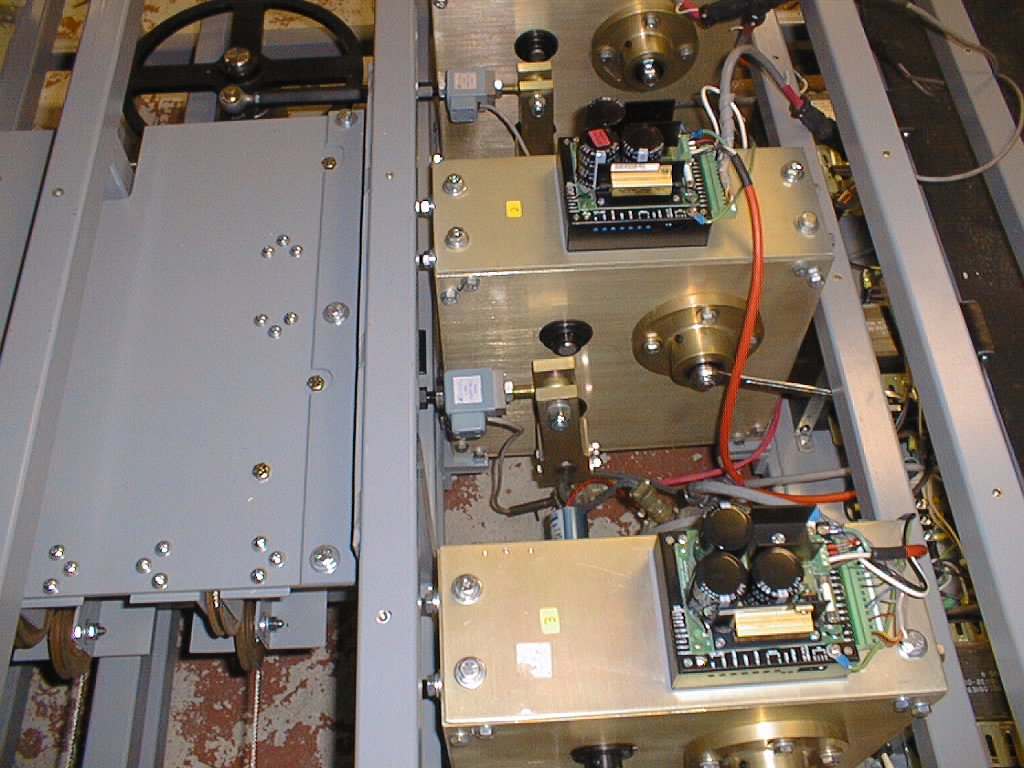
Together, the 300‑X and 400‑X allow simulator developers to select the appropriate control loading solution based on certification level, force requirements, and system scale, while maintaining a consistent servo‑based design philosophy and long‑term supportability across programs.
Certification Support and System Design
The 300‑X is engineered to support FAA Level 1 through Level 7 training device applications and has been integrated into simulators for aircraft platforms such as CRJ, 737, A320, and Robinson R22/R44. Its modular electronics architecture and streamlined cabling design enable straightforward installation, simplified maintenance, and long‑term operational durability.
All major components are based on commercial off‑the‑shelf (COTS) hardware, with application‑specific adaptations implemented.
Flight Control Software Model
The software model is based on the flight model provided with centering springs if required.
The model is designed so that it can be tuned from the Host, thus it could be used for any light aircraft or transport.
Except for setting the scale factors for position and force, this model will not need to be tuned to each specific application.
Control Parameters from Host
Dynamic pressure, roll rate, pitch rate, yaw rate, dynamic pressure divided by velocity, boost oil pressure, autopilot command, autopilot engage, weight on nose wheel, nose wheel velocity, and nose wheel angle.
If required by contract, other parameters could be added.
Safety
The safety system in the control loader monitors the output to the DAC that drives the electronics. Monitoring the DAC allows the safety software to abort the system if the command to the electronics is excessive.
In addition to the analog variables monitored by the safety software, the enable command to the electronics has a one-shot that must be continuously re-triggered by the software. Should the software halt for any reason, the one-shot will time out and the loader will abort. E-Stop safety switches can be utilized for a mechanical abort.
Configuration Flexibility and System Compatibility
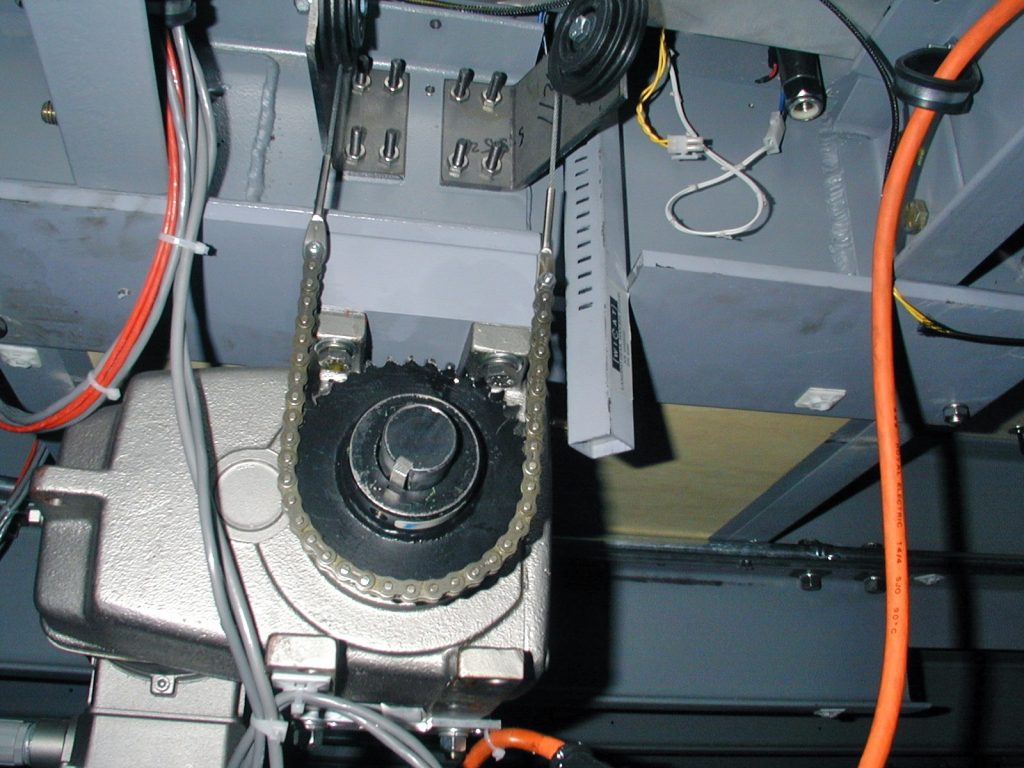
Model 300-X
The Model 300‑X is fully configurable to accommodate a wide range of torque and load requirements, allowing it to support multiple control configurations without extensive system redesign. This flexibility enables efficient adaptation across diverse training and simulation platforms.
When integrated with Servos & Simulation motion base platforms, the 300‑X forms part of a cohesive, unified simulation architecture supporting professional training and evaluation environments.
FAQ
The Model 300‑X is a servo-driven control loading system designed to provide realistic force feedback for simulator controls such as yokes, pedals, and throttles in professional simulation environments.
The Model 300‑X is typically used in FAA Level 1–7 simulation systems, training devices, and research applications requiring accurate control feel and repeatable performance.
The “X” indicates the number of control axes in the system. For example, an aircraft configuration typically uses 3 axes (pitch, roll, yaw), while additional axes can be added for throttle, nose wheel steering, or other controls.
The Model 300‑X provides dynamic, servo-driven force feedback that adjusts in real time based on simulation inputs, replicating the behavior of real-world control systems.
It integrates with host simulation software through control interfaces and communication systems, allowing real-time response to flight dynamics and control inputs.
Yes. The system can be configured for different numbers of axes, control types, and performance requirements depending on the application.
Interested?
Contact us for more information
For all inquiries, contact Servos & Simulation to discuss technical requirements, program alignment, and procurement timelines.